


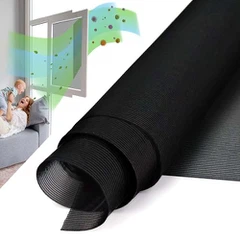
Hey there! As a supplier of pleat mesh, I often get asked about the shear strength of pleat mesh. So, I thought I'd dive into this topic and share some insights with you.
First off, let's understand what shear strength actually means. Shear strength is the ability of a material to resist forces that cause its internal structure to slide against itself. In the context of pleat mesh, it's all about how well the mesh can withstand forces that try to make its layers or strands move past each other.
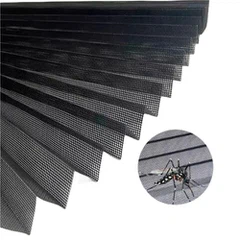
Pleat mesh is used in a variety of applications, like Plisse Fly Screen, Plisse Retractable Screen, and Mosquito Pleated Mesh. These applications expose the mesh to different kinds of stresses, and the shear strength plays a crucial role in determining its durability and performance.
The shear strength of pleat mesh depends on several factors. One of the most important factors is the material used to make the mesh. Different materials have different inherent strengths. For example, if the pleat mesh is made from high - quality polyester, it will generally have better shear strength compared to a lower - grade plastic mesh. Polyester is known for its toughness and ability to withstand a certain amount of stress without deforming or breaking.
The construction of the pleat mesh also matters a great deal. The way the strands are woven or bonded together can significantly impact its shear strength. A tightly woven mesh will have more resistance to shear forces because the strands are closely packed and support each other. On the other hand, a loosely woven mesh may be more prone to shearing as the strands have more freedom to move independently.
Another factor is the thickness of the mesh. Thicker pleat mesh usually has higher shear strength. A thicker strand can handle more force before it starts to deform or break. However, it's a balance because a very thick mesh may also be heavier and less flexible, which might not be suitable for some applications.
Let's talk about how we test the shear strength of pleat mesh. There are several standard testing methods out there. One common method involves applying a gradually increasing shear force to a sample of the mesh until it fails. The force at which the mesh fails is recorded as its shear strength. This test gives us a quantitative measure of how strong the mesh is under shear stress.
In real - world applications, the shear strength of pleat mesh is put to the test in many ways. For instance, in a Plisse Retractable Screen, when the screen is being pulled out or retracted, it experiences shear forces. If the shear strength of the mesh is too low, the mesh may start to tear or come apart at the edges. This can not only make the screen look bad but also reduce its effectiveness in keeping out insects or debris.
In a Mosquito Pleated Mesh used on windows, it may be exposed to wind forces. Strong winds can create shear forces on the mesh, and if the mesh can't handle these forces, it can lead to damage. That's why it's so important to have a pleat mesh with good shear strength.
As a supplier, I always make sure that the pleat mesh we offer has high shear strength. We source the best materials and use advanced manufacturing techniques to ensure that our meshes are as strong as possible. We also conduct regular quality control checks to make sure that the shear strength of our products meets or exceeds industry standards.

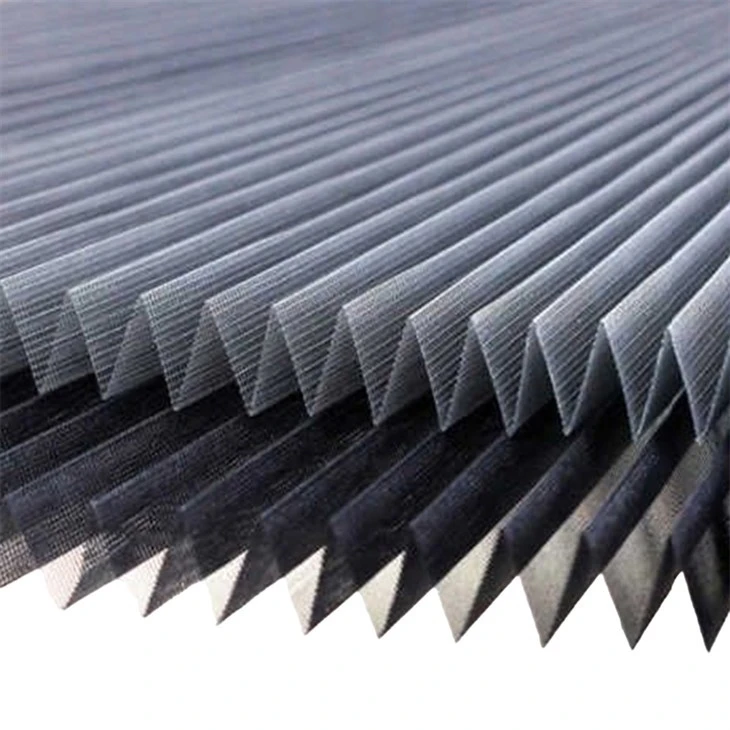
If you're in the market for pleat mesh, whether it's for a Plisse Fly Screen, a retractable screen, or any other application, you need to consider the shear strength. A mesh with high shear strength will last longer, perform better, and save you money in the long run. You won't have to replace the mesh as often due to damage caused by shear forces.
When you're comparing different pleat mesh products, don't just look at the price. Make sure to ask about the shear strength. A cheaper mesh may seem like a good deal at first, but if it has low shear strength, you'll end up spending more on replacements.
If you have any questions about the shear strength of our pleat mesh or want to learn more about our products, feel free to reach out. We're always happy to help you find the right mesh for your needs. Whether you're a homeowner looking to install a Mosquito Pleated Mesh on your windows or a contractor working on a large - scale project, we've got you covered.
So, if you're interested in purchasing pleat mesh, get in touch with us. We can provide you with samples to test the shear strength and other properties of our mesh. We're confident that once you see the quality of our products, you'll choose us as your pleat mesh supplier. Let's have a chat and discuss how we can meet your specific requirements.
References
- ASTM International standards for testing the mechanical properties of mesh materials.
- Textbooks on materials science and engineering related to the strength of woven and non - woven materials.