


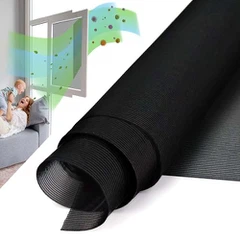
Hospitals are places where patients go to recover, and maintaining a clean and healthy environment is of utmost importance. One significant threat to this environment is pollen, which can trigger allergic reactions and exacerbate respiratory conditions. As a pollen screen mesh supplier, I understand the critical role that high - quality pollen screen meshes play in hospitals. In this blog, I will discuss the strict standards that a pollen screen mesh must meet to be suitable for use in a hospital setting.
Filtration Efficiency
The primary function of a pollen screen mesh is to filter out pollen particles. In a hospital, the filtration efficiency needs to be extremely high. Pollen grains can vary in size, typically ranging from about 10 to 100 micrometers. A good pollen screen mesh should be able to capture a high percentage of these particles.
For hospital use, a mesh with a filtration efficiency of at least 95% for pollen particles in the size range of 10 - 100 micrometers is recommended. This ensures that the majority of pollen entering the hospital through open windows or ventilation systems is blocked. Our Anti Pollen Screen is designed to meet these high - efficiency standards, providing a reliable barrier against pollen intrusion.
To achieve such high filtration efficiency, the mesh material and its structure are crucial. The mesh should have a fine and uniform pore size distribution. A regular and consistent pore size helps in accurately capturing pollen particles while allowing for proper air circulation. Advanced manufacturing techniques are employed to ensure that the mesh is precisely engineered to meet these requirements.
Airflow and Ventilation
While filtration is essential, it should not come at the expense of airflow. In a hospital, proper ventilation is vital for removing stale air, controlling humidity, and maintaining a comfortable environment for patients and staff. A pollen screen mesh that restricts airflow too much can lead to poor air quality and increased energy consumption for ventilation systems.
The mesh should have a high air permeability rating. A good rule of thumb is that the mesh should allow for an airflow rate of at least 0.5 m/s under normal operating conditions. This ensures that fresh air can easily enter the hospital while still effectively filtering out pollen. Our 16×48 Pollen Screen Mesh is designed to balance filtration and airflow, providing optimal ventilation without sacrificing pollen protection.
The design of the mesh can also impact airflow. For example, a mesh with a smooth surface and a well - organized structure will cause less turbulence and resistance to airflow compared to a mesh with a rough or irregular surface. Additionally, the spacing between the mesh fibers should be carefully calculated to allow for efficient air passage.
Durability and Longevity
Hospitals require equipment and materials that are durable and long - lasting. A pollen screen mesh is no exception. It needs to withstand the rigors of daily use, including cleaning, exposure to different environmental conditions, and potential mechanical stress.
The mesh material should be made from high - quality, robust materials. For example, some meshes are made from stainless steel or high - strength synthetic polymers. These materials are resistant to corrosion, wear, and tear. They can also withstand repeated cleaning without losing their filtration efficiency or structural integrity.
In addition to the material, the construction of the mesh is also important. A well - woven or knitted mesh will be more durable than a poorly constructed one. The edges of the mesh should be properly finished to prevent fraying and ensure a long service life. Our Pollen Proof Window Screen is built to last, providing long - term protection against pollen in hospital environments.
Cleanability
Maintaining a clean environment in a hospital is essential for preventing the spread of infections. A pollen screen mesh should be easy to clean to remove any accumulated pollen, dust, and other contaminants.
The mesh material should be resistant to staining and should not absorb dirt easily. It should be possible to clean the mesh using common cleaning agents without damaging the mesh structure or reducing its filtration efficiency. For example, a mesh that can be easily wiped down with a damp cloth or washed with mild soap and water is ideal.
Some meshes are also designed to be self - cleaning to a certain extent. For instance, a mesh with a hydrophilic surface can cause water droplets to spread evenly across the surface, carrying away contaminants. This reduces the frequency of manual cleaning and helps to maintain the mesh's performance over time.
Compatibility with Hospital Infrastructure
The pollen screen mesh must be compatible with the existing hospital infrastructure. This includes windows, ventilation systems, and other architectural features.
The mesh should be available in a variety of sizes and shapes to fit different window and ventilation openings. It should also be easy to install and remove for maintenance purposes. For example, a mesh that can be attached using simple clips or fasteners is more convenient than one that requires complex installation procedures.
In addition, the mesh should be able to integrate seamlessly with the hospital's ventilation systems. It should not interfere with the operation of fans, ducts, or other ventilation components. Compatibility with the hospital's security systems is also important. The mesh should not compromise the security of the building while providing pollen protection.
Safety and Non - Toxicity
In a hospital, the safety of patients and staff is a top priority. The pollen screen mesh should be made from non - toxic materials that do not release any harmful substances into the air.
The materials used in the mesh should be free from heavy metals, volatile organic compounds (VOCs), and other potentially hazardous chemicals. This ensures that the mesh does not pose any health risks to those in the hospital environment. Additionally, the mesh should not generate any electrostatic charges that could attract dust and other contaminants or cause electrical interference.
Fire Resistance
Hospitals are required to meet strict fire safety standards. A pollen screen mesh should have adequate fire - resistant properties.
The mesh material should be treated to be fire - retardant or made from inherently fire - resistant materials. It should not contribute to the spread of fire in case of an emergency. The fire - resistance rating of the mesh should meet or exceed the relevant hospital fire safety codes.


Conclusion
As a pollen screen mesh supplier, I am committed to providing products that meet the strict standards required for hospital use. Our meshes are designed to offer high - efficiency filtration, optimal airflow, durability, cleanability, compatibility with hospital infrastructure, safety, and fire resistance.
If you are a hospital administrator, facilities manager, or involved in the procurement of hospital supplies, I encourage you to contact us to discuss your specific pollen screen mesh needs. We can provide you with detailed product information, samples, and competitive pricing. Let us work together to create a clean and healthy environment in your hospital.
References
- "Air Filtration in Healthcare Facilities" - American Society of Heating, Refrigerating and Air - Conditioning Engineers (ASHRAE)
- "Guidelines for Environmental Infection Control in Health - Care Facilities" - Centers for Disease Control and Prevention (CDC)
- "Building Codes for Healthcare Facilities" - International Code Council (ICC)