


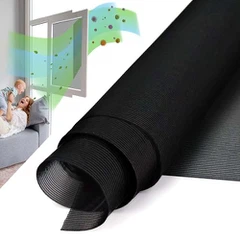
The installation time of a plisse insect screen can vary significantly depending on several factors. As a supplier of plisse insect screens, I've had the opportunity to observe various installation processes and understand the elements that influence the time required. In this blog, I'll break down these factors and give you a general idea of how long it might take to install a plisse insect screen.
Factors Affecting Installation Time
Screen Size
One of the most obvious factors is the size of the plisse insect screen. Larger screens generally take more time to install than smaller ones. For instance, a small window screen might be installed in less than an hour, while a large patio door screen could take several hours. This is because larger screens require more measurements, more precise cutting, and more labor - intensive installation steps. When measuring a large screen, multiple points need to be accurately measured to ensure a perfect fit. Cutting the screen material and the frame for a larger size also demands more attention to detail to avoid errors.
Complexity of the Installation Location
The location where the plisse insect screen will be installed plays a crucial role. If the installation is on a standard, flat window or door, the process is relatively straightforward. However, if it's an irregular - shaped window, such as a bay window or a circular window, the installation will take much longer. These non - standard shapes require custom - fitting the screen, which involves additional measurements, shaping the frame, and ensuring that the screen functions properly within the unique geometry of the window. For example, a bay window has multiple angles and curves, and the plisse screen needs to be adjusted to fit smoothly around these features.
Experience of the Installer
The skill and experience of the person installing the plisse insect screen are also important. An experienced installer who has worked with plisse screens before will likely complete the job faster than someone who is new to the task. Experienced installers are familiar with the tools and techniques required for installation. They know how to handle the screen material without damaging it, how to quickly and accurately measure the installation area, and how to troubleshoot any issues that may arise during the process. For example, they can easily identify if there are any alignment problems with the frame and correct them efficiently.


Type of Plisse Insect Screen
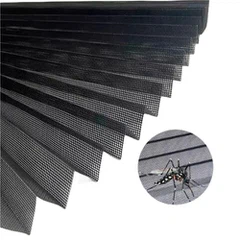
There are different types of plisse insect screens available in the market, such as Pleat Mesh, Mosquito Pleated Mesh, and Plisse Window&door Screen. Each type may have different installation requirements. Some screens come with pre - assembled frames, which can significantly reduce the installation time. On the other hand, screens that require on - site assembly of the frame will take longer. For example, a plisse screen with a pre - made frame can be simply attached to the window or door, while a screen that needs to be assembled from individual parts will involve more steps, such as joining the frame pieces and attaching the mesh.
General Installation Time Estimates
Small Window Screens
For small, standard - sized window screens (up to around 24 inches by 36 inches), an experienced installer can usually complete the installation in about 30 minutes to an hour. This includes measuring the window, cutting the screen material to size, attaching the frame to the window, and testing the screen to ensure it operates smoothly. The measurements are relatively straightforward, and the frame installation is quick on a small window.
Medium - Sized Window or Door Screens
Medium - sized screens, such as those for standard doors or larger windows (ranging from about 36 inches by 48 inches to 48 inches by 60 inches), typically take between 1.5 to 3 hours to install. The larger size means more time is needed for accurate measurements and fitting. The frame installation may also be more complex, especially if the door or window has specific mounting requirements.
Large or Custom - Shaped Screens
Large patio doors or irregular - shaped windows can take anywhere from 3 to 8 hours or more to install. Custom - fitting the screen to a non - standard shape requires a high level of skill and precision. The installer may need to make multiple adjustments to the frame and the screen material to ensure a proper fit. Additionally, large screens often involve more heavy - duty hardware, which can add to the installation time.
Installation Process Steps
Preparation
Before the actual installation begins, the installer needs to prepare the area. This includes cleaning the window or door frame where the screen will be installed. Any dirt, dust, or debris can interfere with the proper installation and functioning of the screen. The installer also needs to gather all the necessary tools, such as a tape measure, a screwdriver, a utility knife, and a level. Measuring the installation area accurately is a critical step in this stage. A wrong measurement can lead to a poorly fitting screen.
Frame Assembly (if required)
If the plisse insect screen comes with an unassembled frame, the installer will need to assemble it. This involves joining the frame pieces together according to the manufacturer's instructions. The frame needs to be assembled precisely to ensure that it fits correctly on the window or door. The installer may use screws or other fasteners to hold the frame together.
Screen Attachment
Once the frame is ready, the screen material is attached to the frame. This can be done using a variety of methods, such as gluing or using clips. The screen needs to be pulled tightly and evenly across the frame to ensure that there are no wrinkles or sagging. Special attention is paid to the edges of the screen to make sure it is securely attached.
Mounting on the Window or Door
The assembled screen is then mounted on the window or door frame. This may involve using brackets, screws, or other mounting hardware. The installer needs to ensure that the screen is level and properly aligned. Any misalignment can cause the screen to not function correctly, such as not rolling up or down smoothly.
Testing
After the screen is installed, it is tested to ensure that it operates properly. The installer will roll the screen up and down several times to check for any resistance or jams. Any issues are addressed immediately to ensure that the customer is satisfied with the installation.
Contact for Purchase and Installation
If you're interested in purchasing a plisse insect screen and need professional installation, I'm here to assist you. Whether you have a small window or a large, custom - shaped opening, we have a wide range of plisse insect screens to meet your needs. Our experienced team can provide you with an accurate estimate of the installation time and cost based on your specific requirements. Feel free to reach out to discuss your project further.
References
- Industry knowledge and experience as a plisse insect screen supplier.
- Observations from various plisse insect screen installation projects.