


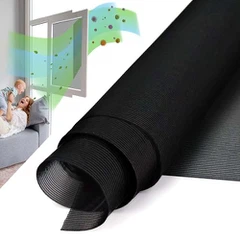
Do folding screen meshes have anti - static properties? This is a question that many customers often ask me as a supplier of folding screen meshes. In this blog, I will delve into this topic, exploring the nature of anti - static properties, whether folding screen meshes possess them, and the implications for users.
Understanding Anti - Static Properties
Before we can determine if folding screen meshes have anti - static properties, it's essential to understand what anti - static means. Static electricity is the imbalance of electric charges within or on the surface of a material. When two materials come into contact and then separate, electrons can be transferred from one material to the other, creating a static charge. Anti - static materials are designed to prevent or reduce the buildup of static electricity.
The buildup of static electricity can cause several problems. For example, it can attract dust and dirt, making the material look dirty and requiring more frequent cleaning. In some industrial settings, static electricity can even pose a safety hazard, potentially causing sparks that could ignite flammable substances. Therefore, anti - static properties are highly desirable in many applications.
The Composition of Folding Screen Meshes
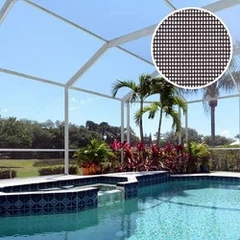
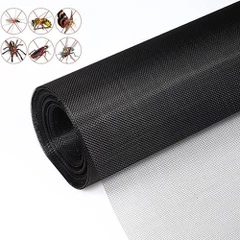
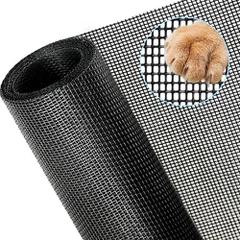
Folding screen meshes are commonly made from a variety of materials, including fiberglass, polyester, and metal. Each material has its own characteristics, which can influence whether the mesh has anti - static properties.
Fiberglass meshes are popular due to their durability and resistance to corrosion. Fiberglass itself is an insulator, which means it can accumulate static charges. However, some manufacturers treat fiberglass meshes with anti - static coatings. These coatings work by providing a conductive path for the static charges to dissipate, reducing the buildup of static electricity on the surface of the mesh.
Polyester meshes are also widely used in folding screens. Polyester is a synthetic polymer that is known for its strength and flexibility. Similar to fiberglass, polyester can generate static electricity. To counter this, some polyester folding screen meshes are engineered with anti - static additives during the manufacturing process. These additives help to prevent the accumulation of static charges by altering the surface properties of the mesh.
Metal meshes, such as stainless steel or aluminum, are inherently conductive. Conductive materials do not allow static charges to build up because the charges can freely move through the material. As a result, metal folding screen meshes generally have excellent anti - static properties without the need for additional treatments.


Testing for Anti - Static Properties
To determine if a folding screen mesh has anti - static properties, several testing methods can be employed. One common method is the surface resistance test. In this test, the resistance of the mesh surface is measured. A lower surface resistance indicates better conductivity and, therefore, better anti - static properties.
Another test is the triboelectric charging test. In this test, the mesh is rubbed against another material to simulate the conditions under which static electricity is generated. The amount of static charge generated is then measured. A mesh with good anti - static properties will generate less static charge during this test.
Benefits of Anti - Static Folding Screen Meshes
If a folding screen mesh has anti - static properties, it offers several benefits to the users. Firstly, as mentioned earlier, anti - static meshes attract less dust and dirt. This means that the screens will stay cleaner for longer periods, reducing the need for frequent cleaning. For homeowners, this can save time and effort in maintaining their screens.
Secondly, in environments where there are sensitive electronic devices, anti - static folding screen meshes can prevent static electricity from interfering with the operation of these devices. For example, in an office or a laboratory, static electricity can cause malfunctions in computers and other electronic equipment. Using anti - static folding screen meshes can help to create a more stable environment for these devices.
Our Product Offerings
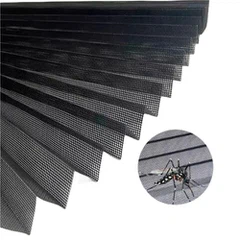
As a supplier of folding screen meshes, we offer a wide range of products, including Mosquito Pleated Mesh, Folding Fly Screen Mesh, and Plisse Retractable Screen. Our meshes are available in different materials, and we can provide options with anti - static properties.
Our fiberglass meshes are treated with high - quality anti - static coatings to ensure effective dissipation of static charges. Our polyester meshes are engineered with advanced anti - static additives, providing long - lasting anti - static performance. And our metal meshes, thanks to their inherent conductivity, offer natural anti - static protection.
Conclusion
In conclusion, whether folding screen meshes have anti - static properties depends on the material they are made of and the treatments or additives used during manufacturing. Fiberglass and polyester meshes can be made anti - static through coatings or additives, while metal meshes have inherent anti - static properties. Anti - static folding screen meshes offer several benefits, such as reduced dust attraction and a more stable environment for electronic devices.
If you are interested in our folding screen meshes with anti - static properties, please feel free to contact us for more information and to discuss your specific requirements. We are committed to providing high - quality products that meet your needs.
References
- ASTM International. (Year). Standard test methods for surface resistivity of electrical insulating materials. ASTM D257.
- ISO (Year). International standard for electrostatic properties of materials. ISO 18185.